ADVOCATE &
EDUCATOR.
I believe education is one of the most powerful forms of civic engagement. It is where curiosity becomes understanding, where assumptions are challenged, and where people begin to recognize the systems shaping the world around them.
My work sits at the intersection of political science, storytelling, and public scholarship. Whether I'm teaching a university class, speaking to a community audience, or presenting The System Works, my goal is the same: to help people see beyond individual events and understand the incentives, institutions, and relationships that produce them.
I don't believe informed citizenship belongs only in classrooms or election years. It belongs in everyday conversations, workplaces, neighborhoods, and communities. If my work accomplishes anything, I hope it leaves people asking better questions, thinking more critically, and feeling more confident in their ability to participate in the ongoing work of democracy.
_edited.png)
About Me
.png)
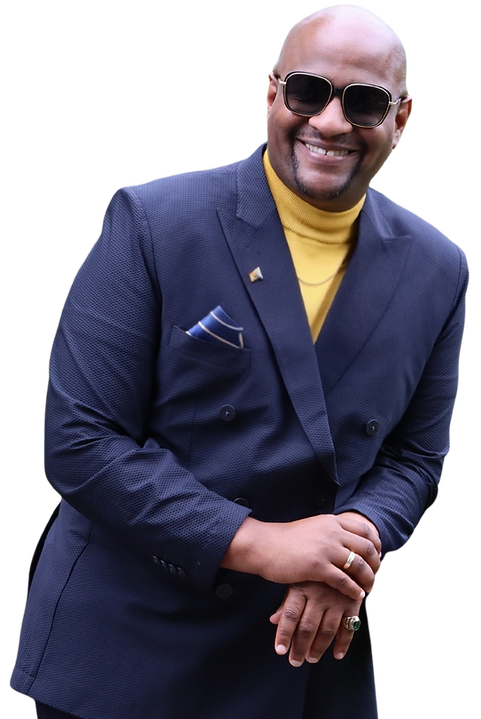
Dr. Kenneth Bryant Jr. is an Associate Professor of Political Science at the University of Texas at Tyler, where he teaches American politics, political behavior, race and ethnicity, media and politics, and political polarization. He earned his Ph.D. and M.A. in Political Science from the University of Missouri and his B.A. from Wright State University.
As an educator, author, and public scholar, Dr. Bryant's work explores how political systems, institutions, media, and incentives shape public life. He is the creator of The System Works, a multimedia civic education initiative that combines political science, visual storytelling, original music, and audience engagement to help people better understand how power operates and how citizens can participate more effectively in democratic life.
Dr. Bryant is the co-author of Battle for the Heart of Texas: Political Change in the Electorate and Game of Politics: Conflict, Power, & Representation. His scholarship also includes a chapter in Political Authority, Social Control and Public Policy and research published in Critical Issues in Justice and Politics.
Beyond academia, Dr. Bryant is an active public commentator whose work has appeared in outlets including the Dallas Morning News, the Austin American-Statesman, and KLTV. He has contributed opinion essays, appeared on podcasts and broadcast media, and developed educational resources and institutional reports focused on race, inclusion, social justice, and belonging. His research and teaching have been presented at conferences across the United States, including the American Political Science Association, Midwest Political Science Association, Southern Political Science Association, and Western Political Science Association.
Since joining the UT Tyler faculty in 2017, Dr. Bryant has become recognized for making complex political ideas accessible to students and public audiences alike. His teaching has earned numerous honors, including the 2023 University of Texas System Regents' Outstanding Teaching Award, one of the highest recognitions for teaching excellence in the UT System. Through his scholarship, speaking, writing, and public engagement, he continues to advance civic learning by equipping audiences with the tools to think critically about the systems that shape their communities and their democracy.
Published Work
Articles, Books and Chapters
Select Publications
Article: Policing Communities Of Color: An Historical Examination Of Social Control & Protest Management Strategies
July 4, 2019
Law enforcement social control policies over black Americans can be traced back to early policing. Questions abound regarding the fairness, appropriateness, legality, and legitimacy of police methods, as critics have accused policing agencies of adopting punitive and repressive measures that target communities of color (and act as provocation for rioting). This chapter will use a critical lens to first investigate the historical social control strategies used against communities of color by law enforcement (beginning with antebellum “beat companies” to more contemporary “broken windows” policies). Next, the author observes that, in addition to institutional evolution, police behavior (specifically related to community policing and responses to community protests) have accordingly shifted since the nineteenth century. For example, the author discusses the three current strategies of protest management (escalated force, negotiated management, and strategic incapacitation) that have all been embraced to varying degrees with relationship to police response to black community protests. Last, the author explores the iterative process of police “command and control” policies and black community protests, noting that these competing forces have “coevolved,” mirroring one another, and feature antagonistic attitudes from both sides.
August 11, 2022
Texas is a solid red state. Or trending purple. Or soon to be blue. One thing is certain: as Texas looms ever larger in national politics, the makeup of its electorate increasingly matters. At a critical moment, as migration, immigration, and a maturing populace alter the state’s political landscape, this book presents a deeply researched, data-rich look at who Texas voters are, what they want, and what it might mean for the future of the Republican and Democratic parties, the state, and the nation.
August 26, 2022
A renowned comedian once joked, “Say the haves gave the have-nots half of what they have, then the haves would still be the haves, but the have-nots would be the have-somethings.” That joke might have gotten a laugh in the room, but Americans–especially affluent Americans–fail to see the humor. Indeed, their perspective is that “having” is the result of good old-fashioned hard-work, merit, and opportunism. Conversely, to be a “have-not” is a consequence of laziness, entitlement, and “idle” lifestyles. These attitudes–according to Anthony R. DiMaggio–contribute to a political and economic hegemony that not only dismisses class inequality in the United States but exacerbates it...
August 2020
Textbook providing a firm foundation in the American political system, including detailed reviews of the branches of government, the founding documents, public opinion, political parties and political campaigns.
Upcoming Book: Is There a Bright Side? Empowering Students in an Age of Cynicism
Coming Soon
A project for educators and students, striving to present a balanced view of our political and institutional realities, acknowledging the myriad challenges we face while also illuminating the paths towards positive change. It serves as a reminder to us all that, while we inherit the world as it is, we possess the power to rewrite its story. This book aims to redefine the narrative around teaching politics in higher education. By juxtaposing critical analyses with optimistic outlooks, the project seeks to empower educators and students alike, challenging them to see beyond inherent skepticism and engage constructively with political systems.